Showing posts with label romance writing. Show all posts

Guest: Jana Hollifield and THe Problem with Goodbye

http://goo.gl/HLAScu

Today I'm excited to introduce my fellow author Jana Hollifield (@janahollifield), who resides in a coastal northern California town bordered by majestic redwoods.  Her love of animals, kayaking, and beachcombing makes this an idyllic place to live.  When the rainy season begins, Jana likes to indulge in the pleasure of cuddling on the couch with a good book. Born into a creative family of artists, Jana’s interest in writing was shelved over many years while she pursued her passion for painting.  However, the desire to write ultimately became irresistible and her debut novel, The Problem with Goodbye takes the classic murder mystery and injects it with healthy doses of romance, humor, and extrasensory perception for a unique romantic suspense experience.

Q:  Welcome, Jana! We delighted to have you here today. Please tell us about your latest release. Do you have a review you could share with us?

A: The Problem with Goodbye is a romantic suspense novel with a substantial mystery element, set in the beautiful city of Portland, Oregon. The story is written in first person narrative alternating between the female and male protagonists, Cora Dalton and Ryan McCabe. 

Cora is on the run from a determined stalker whose rage has culminated in the murder of her sister.  She trusts no one, not even the police, until she meets Ryan, a stranger with the talent to uncover her darkest secrets with a simple touch. He senses what others cannot, and when he stumbles across Cora, the beautiful lead witness in his best friend’s latest homicide case, one caress tells him she is desperate…and lying about something.  Ryan knows what it’s like to be all alone in the world, and he can’t just walk away.  Forming an uneasy alliance, the two struggle to identify the ruthless madman who is hunting Cora while fighting an attraction that could get them both killed. 


A 5 star review posted on Amazon by S. Bell describes The Problem with Goodbye this way:
It's been years since I started reading a book and couldn't put it down until I finished it. This one hooked me right away and I loved the characters. This was just my kind of book - a well-written romantic-suspense. The author made you feel like you knew Cora and Ryan. Ryan and Ollie's relationship was one of those extra special ones that you don't find every day. I can't wait for the next book by this very talented new author.

Q: What do you enjoy most about writing romantic suspense?
A: Romantic Suspense is wonderful because it allows you to blend well-defined genres in an exciting way.  As a reader, I’m drawn to suspense and mystery novels, but sometimes find myself hankering for a bit more romance.  Love is something we all aspire to have in our lives, so it seems almost unnatural not to have it as an element, at least to some degree, in every book.  Romantic Suspense provides authors the freedom to fully develop a moving love story within the framework of a well-plotted and thrilling mystery novel.             
 
Q: How did your story’s setting impact your plot or characters?
A: Since I live in northern California amongst the redwoods, I wanted the story to take place in the Pacific Northwest.  I have visited Portland multiple times and it was the perfect choice.  It’s a beautiful, environmentally-conscious city that I researched thoroughly to portray it almost as if it were a secondary character in the book.   

 Q: Did you choose the title of your book and if so how did you do it?
A: Yes, I chose the title, The Problem with Goodbye.  It is reflective of the challenging relationship between the two protagonists, Cora and Ryan, but it also speaks to the loss of loved ones both of these characters experience. 

Q: Please tell us about your favorite character in the book.
A: This is a tough question because the two main characters, Ryan and Cora, are my favorites for various reasons.  Both characters are good-hearted but flawed, trying their best to handle an extraordinarily dangerous situation.  However, Ryan’s best friend, Portland homicide detective, Ollie O’Neill, is not only equally beloved by me, he has been favorably singled out by several readers and reviewers of the book.  Ollie was a joy to write and he brings many humorous moments to the story.

Q: When did you know you wanted to be an author?
A: I’ve always had an interest in writing, even as a pre-teen, but issues with dyslexia made the dream of being an author seem out of reach.  After years of pursuing a passion for painting, I finally gave in to my desire to write.  That was about three years ago and it was one of the greatest decisions of my life. 

Q: Which element of story creation is your favorite? (Characters, settings, plots, etc.?)
A: Creating the characters is definitely my favorite.  The characters come first and then the story is developed from there.  I also enjoy crafting a solid plot so that readers can delve into an intriguing mystery, but it’s the characters of a novel that interest us most, make us care, and allow us to emotionally invest in a story.

Q: Do you have any advice for unpublished authors?
A: My advice is to continue writing.  Make time to write every day, even if it’s just a few paragraphs.  And don’t forget to appreciate the simple pleasure of writing.  If the pressures of day-to-day life or the creative demands you are placing on yourself turn writing into a chore for you, it will show in your work.  I also recommend reading.  Many artists learn a great deal about how to paint by wandering museums and studying the works of the old masters.  Exploring how other talented authors have used style, character development and plotting to create fantastic works of fiction can inspire you to strive for excellence in your own writing.  

Q: Thanks so much for sharing your insights with us, Jana. One final question: What’s next for you?
A:  I am presently at work on the sequel to The Problem with Goodbye which is called The Problem with Second Chances.  In this story, Ryan McCabe is convinced by his ex-lover to help an innocent man accused of murder, stirring up unresolved issues from the past that threaten not only Ryan’s current relationship with Cora, but also his life.  


Why I Write What I Do


My friend and talented author, Eliza Knight, asked me to participate in this blog tour about my writing process. I don't usually write about my writing process but it was fun to think about.
http://amzn.com/B008N1UZVC

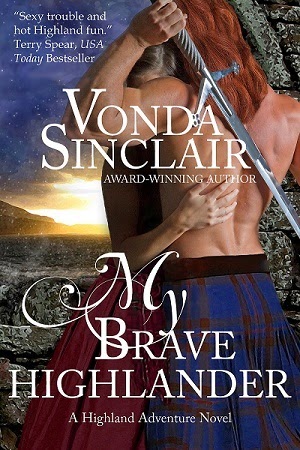
      What am I working on? I'm finishing up a Scottish historical romance novel, My Rebel Highlander, sixth in my Highland Adventure Series. The hero is Robert MacInnis, the Earl of Rebbinglen, affectionately known as Rebbie to his friends. Rebbie has been an entertaining secondary character in the past four books of the series. He's the friend of several of the other heroes, especially Dirk from My Brave Highlander and Lachlan from My Wild Highlander. Rebbie also features prominently in My Daring Highlander. He's a charmer and somewhat of a lady's man with a wry sense of humor and a keen sense of curiosity--or nosiness--as his friends say.
http://amzn.com/B005JFBISE 
I hope readers will enjoy this story! It's a bit different from some of my others. But I always say that. LOL I do try to make each book different from the previous ones so readers can't anticipate what will happen next. Of course, since it's a romance, we all know it will have a happy ending. But what kind of emotional and physical trauma will the characters have to endure before they get there?

Rebbie is probably one of my most well-known secondary characters and it was fun to learn more about his past. He does have some interesting secrets. :)

http://amzn.com/B00GB5M4K2


        How does my work differ from others in its genre?
This is difficult to answer. One way my books differ is that generally my heroines are unconventional for historical romance heroines. I rarely write innocent, inexperienced virgins who have little in the way of backstory. The heroines who pop into my mind have an interesting past and usually they've endured hard times in one way or another. These women are sometimes not pure as the driven snow (but sometimes they are), nor are they strumpets. LOL But somewhere in between, much like modern women in some ways. Of course, they have to conform to society's edicts to an extent, but they're not defined by it. They have often been controlled by men in the past, but when they have an opportunity to make their own decisions and choices, they go for it. Deep down, they're strong, admirable women who care about their family members and friends, and would risk life and limb for those they love. But they're not perfect. They have flaws, and in many cases, some of the men in their lives in the past have forced them into abhorrent situations. But this doesn't destroy the women. The saying what doesn't kill you makes you stronger applies in this case.

Duart Castle

   Why do I write what I do? I love historic Scotland! I have been to Scotland, but not Scotland of the 1600s, of course. :) But I like imagining what it might have been like. It was a harsh and forbidding time to live and, in the Highlands, no doubt surviving was even more of a challenge. I enjoy writing about tough Highland warriors who fought for everything they had. Enemies were often challenging them from all sides, if not Englishmen, then the neighboring clan, some greedy and vengeful enemy, or even their own clansmen. Politics was an ever-shifting sea. Sometimes whether someone was friend or foe was unclear. Treachery and intrigue ran rampant.

But, even more important to me is the romance. I love writing about the complex and spellbinding process of two people falling in love. It is a mélange of intense emotions such as fear, hope, joy, excitement, anger and many other things. Setting these stories in historic Scotland dictates that the characters must follow a certain set of cultural and societal guidelines, which I enjoy. It's wonderful to watch love flourish in these sometimes harsh conditions, like seeing beautiful heather bloom on a rock cliff.

       How does your writing process work? First, I brainstorm ideas. In the case of My Rebel Highlander, I already knew I was going to write Rebbie's story. I had set this up in the previous book. And I knew Rebbie pretty well. I started imagining what kind of heroine would be right for him. What kind of woman would he be most attracted to and want to spend his life with? In general, he's not too keen on marriage, so I knew the woman would have to be really special to him. I looked into the past to see what I could pull out and use to create an intense, emotional and adventurous story. Once I start getting good solid ideas for the characters and the situation they will face, I start writing rough draft scenes. These are usually dialogue and action only. Sometimes these are in order and sometimes they're not. It depends on when the scenes come to me, but I put them in order and keep a scene list so I can make sure everything flows in the right order. I also research specific things that I need to know during the rough draft process, if I haven't already researched it beforehand. But sometimes I don't know what I'll need to know until I reach a certain point. A setting or location, for instance. Or maybe a little known Scottish law.

http://amzn.com/B00C3ONO22
Once I get a section roughed in, I go back and flesh out the scenes in a couple more drafts, adding emotion, description, and lots of other things to give the reader a full experience as if they're living in the story. Once I get this done for the whole story, I go back to the beginning and smooth and polish. Then it's ready for my critique partners and beta readers to go over.

Look for writing process posts from these authors:

Ashley York has a MA in history and writes books set in the high Middle Ages in England, Scotland and Ireland.

L.B. Joramo loves to write, research the 18th century and hike.

Gwyn Brodie writes Scottish historical romance set in the 1600s.

Thanks!
Vonda


My Fierce Highlander is still on sale for .99 cents!

http://amzn.com/B005ESI94C
Gwyneth Carswell, an English lady banished by her father to the harsh Scottish Highlands, wants nothing more than to take her young son away from the violence of two fighting clans--her own distant kin, the MacIrwins, and their enemies, the MacGraths. She risks everything to rescue the fierce MacGrath warrior from the battlefield where he’s left for dead by her clan. She only knows she is inexplicably drawn to him and he wants peace as she does. When her clan learns of her betrayal, they seek vengeance. Dare she trust the enemy more than her own family?

Laird Alasdair MacGrath is driven to end two-hundred years of feuding with the MacIrwins. But by taking in and protecting Lady Gwyneth and her son, he provokes more attacks from his mortal enemy. As the danger and conflict surrounding them escalate, Alasdair and Gwyneth discover an explosive passion neither of them expected. With the arrival of a powerful man from her past, a horrible decision confronts her--give up her son or the man she loves.

When I Call Myself a Writer

I know there is much I could write about today, considering that overall the nation has faced more winter weather this year than in the last few put together. However, I think readers can just look out their windows for a healthy dose of winter beauty. Today I'm in a writer mood. A moody writer mood, so I think, ironically, I will write about that.

It all started with me reading Sherman Alexie's latest poetry book, so I blame him, really. It inspired me, as reading poetry normally does. It inspired me so much I got a creative spurt and, well, now I feel I can answer that nagging question all people who write ask themselves...

When do I call myself a writer?

Is it the first or fifth time I've been published? The tenth? Is it when I sit down to write a story I want to get published or offer to readers? Is it the moment that inspiration hits and words must be poured onto the page or I will go mad? No, all of those things are much more glamorous than the truth, or today's truth, at least.

Today, for me, it's none of those things. It's these things:

1. I call myself a writer when I lose an entire file filled with poetry that I intended to update and self-publish. I got so poetically titillated reading that darn poetry book that I wanted to revisit my own poet days, and I discovered that the ONE file I needed is nowhere to be found. I can't find my bongos, the ones I used when I did performance poetry, either.

2. I call my self a writer when during my morning shower I come up with a fabulous idea I need to write down and flesh out, but since I don't do so until around noon, all I can remember is the phrase, "She ate the bread alone, and now she knew why the spider winked."

3. I call myself a writer when the mystery story I've been working on, the one with intricate whodunnit angle I'd been so proud of, turns to dust before my eyes because I realize that there's no possible way that Mr. Veekas could have possibly eaten the dumplings while walking his favorite hound through the palace where Mrs. Toribund was found half eaten by frogs.

4. I call myself a writer when I can't think of a word that I know is just right on the tip of my tongue. I even beg MS Word's thesaurus feature for help, but all I get is the same five synonyms I've already used. Twice.

5. And finally, I call myself a writer when I get so frustrated about my writing annoyances that I choose to actually write about them in a blog post instead of the maniacal weather that has captivated the nation or Miley Cyrus.

I hope you are all safe and warm and having a great 2014 so far. Until next week, happy reading!

Let's Talk Conflict

Without conflict, there is no story. It doesn't get any simpler than this. As someone who avoids conflict in real life, sometimes it's not that easy to throw trouble in my characters' way. After all, I love my characters. I introduced them to each other. I want them to get their happily-ever-after ending.

But a boy-meets-girl, boy-gets-girl story would not only be short, it would be a little boring as well. And we never want to bore our readers.

There are two kinds of conflict (obstacles to your characters goals and desires): External and Internal.

External conflicts are obstacles over which the characters have no control, but which affects their lives and the decisions they make. The heroine who is a suspect in the hero's murder case. The father who doesnt think the hero is good enough for his little girl. The hero who is a Union soldier and the heroine is a Rebel spy. External conflicts moves the plot along.

Internal conflicts are emotional and are a product of the character's background and personality and experiences. In order for them to be resolved, the character needs to learn something about themselves and/or each other. In the character driven stories that I write, the internal conflict is what drives the story. It's the main conflict in the stories that I write, the last to be resolved. Everything else is complication.

In the story I've just started, the heroine is newly divorced, her children have left home and she's embracing an independence she's enjoying for the first time in her life. Then she begins to fall for the hero, at a time when she doesn't want a man in her life, so she wants to take things really slow. The hero's wife died a few years ago and so when he falls for the heroine, he doesn't want to waste any time, because he knows how precious time is. Conflict!

I'll have to let you know how it all works out, but you can be sure these two will end up perfect for each other, even if life isn't always perfect.

I love stories where the character's change because of each other, where dealing with the conflicts, in the end, is simply a way to grow and to show their love for each other. And when I see characters strive to make things work out, then I cheer them on, and I believe in that happily-ever-after ending.

Natasha
www.natashamoore.com

Writing from a Villain Point of View

Do you like to include the villain’s point of view in your stories? I didn’t in the past, but now I’m finding more and more that I like to include it. It seems to round out the story more. Villains are people, too, and almost like main characters. They are certainly more important than secondary characters. For that reason, it’s imperative to give them strong motivations for doing their evil deeds. What better way to show this motivation than to get inside their heads?

What’s weird about writing villain deep POV is that you need to become the bad guy in order to do this effectively. You have to become bad and think in malicious ways. Sometimes you have to plot and plan to kill your beloved main characters. Of course, you know the villain won’t succeed, at least we hope not. But a strong villain is vital because they need to give the hero and heroine a run for their money. A weak villain would be no challenge and would not force the hero and heroine to live up to their fullest potential. A strong villain can cause your hero and heroine to grow and change in interesting ways. I love it when realistic bad guys force the main characters to do drastic things they wouldn’t normally do to save their own life or the lives of those they love.

A villain who is nothing but evil isn’t 100% believable unless you show exactly why he/ she should be this way. If instead you show at least one positive thing about the villain, show a vulnerability, or delve into something he/ she cares deeply about, this can make the villain more three-dimensional and believable. Someone once said that the villain sees himself as the hero of his own story. This a fantastic way to look at the situation. The villain believes he is right and believes in his own cause.

Another great thing about villain POV is that you can use it to increase the suspense. The reader gets to see what’s going on behind the scenes that the hero and heroine don’t know. Therefore they can be biting their nails long before the hero and heroine realize they are in danger.

Sometimes I’ve been known to freak myself out when writing villain point of view. I didn’t know I could think in such evil ways. LOL I can’t say that I enjoy it as much as hero and heroine point of view, but I do love the way it rounds out my story and provides added suspense, drama and action.

Do you enjoy writing villain point of view? If so, what has it taught you? Who is your favorite villain from TV, a movie or book?
Nicole

Another Opening

This week we’ll be talking about different facets of writing here at Fierce Romance. Today I’m talking about openings. You know, those first few lines or first few paragraphs that, if you can believe the talk, make or break your book.

I struggle with the beginning of every single book/short story/novella that I write. Openings carry so much weight. They not only have to set the tone for the story and introduce character and setting, they have to hook the reader with a story question and make them want to keep reading. It’s enough to give you writer’s block.

I used to get so discouraged when I heard that many editors and agents only read a few pages, and maybe only the first few paragraphs of a submission before deciding if they wanted to request the full manuscript. How could that be possible? They can’t really tell anything that quickly, right? Then I began judging contests and I can honestly say that I can tell in the first couple paragraphs how the rest of the entry will read. If the first few lines are choppy, if there are grammar and spelling errors, it doesn’t get any better as the manuscript goes on. If the opening flows smoothly, with interesting characters and an intriguing premise, the rest of the entry tends to be smooth, interesting and intriguing. The opening truly sets the tone for the rest of the book.


So how do we do that? Sometimes it takes me a while. I often go back and rewrite openings after I’ve gotten farther along in the writing and I know what’s necessary to set up the story. Yet some openings come to me completely the first time out and don’t change that much at all. One of those was the opening to my award-winning (I love being able to say that!) contemporary romance from Samhain The Ride of Her Life. It starts like this:


The day Dean Bastian walked into the bank was the day Sarah decided she was no longer going to be sensible.
But, to be honest, when it came to Dean, she’d never had a bit of sense. Seeing him again after all these years sent her right back to that gawky teenager who’d had a major crush on the bad boy next door.
Dean looked the same as she remembered, tall and dark in his black T-shirt and faded jeans. He crossed the lobby, his long legs covering the distance quickly. When she saw he was headed for her window, an unwanted thrill rippled across her skin. Her heart started beating faster and annoyance fought its way to the surface. She hated not being in control of her feelings.
There was enough she didn’t have control of these days. Like doctors and hospitals and test results.


So in these first few paragraphs I’ve introduced the hero and the heroine, the bad boy and the good girl, and introduced a couple story questions. I hope I’ve made the reader want to read on.


The Ride of Her Life starts with narrative, a good way to set the stage as long as it doesn’t get too boring. Another way to start is with dialogue. This is from the opening of Taste of Honey, my contribution to Ellora's Cave's Seasons of Seduction IV:


“How about a dance, cowboy?”
The come-on in that silky voice would tempt a saint, and God knew Jake Manning wasn’t hittin’ the Pearly Gates anytime soon. When the scent of expensive perfume drifted over the stink of beer, whiskey and stale smoke, his body stirred against his will. He’d ducked in here to nurse a draft and a heart that had been stomped into a million pieces. The last thing he needed was a sweet-smellin’ woman.
But he couldn’t stop from lifting his gaze off the condensation on his mug, and glancing over his shoulder. Sleek blonde hair. An even sleeker body molded by a tight fitting tank top and painted-on jeans. The damn high-heeled boots she wore probably cost more than he made in a month. He turned away and chugged his beer, hoping to rinse away the bitter taste of lessons learned the hard way.


Here again we meet the hero and heroine immediately, another case of opposites which I think makes for immediate and inherent conflict. The tone is definitely different from the last example, but I hope the reader is interested enough in what happened to Jake and why the sweet-smellin’ woman wants to dance with him. And want to keep reading to find out what will happen when they do.


The opening doesn’t have to include both the hero and heroine, sometimes it’s just not possible, even in a romance. So then you have to make sure what’s happening is interesting enough for the reader to keep going until the other character takes the stage. This is the opening to my Red Sage novella, Quinn’s Curse:


Nathaniel Quinn had lived his life at sea, it was only fitting that he die at sea as well. Quinn swallowed another mouthful of icy seawater and coughed as he scrambled to keep his purchase on the small piece of hull he’d managed to snag from the waves churning around him.
The storm had come out of nowhere, tossing the Tempest as if it were a child’s plaything. The churning waves dashed the ship and its crew against the rocks that hid beneath the surface of the water along this rugged Maine coastline. Cries of drowning men surrounded him. Men he’d lived with and worked beside for many years. Good men. Well, as good as a pirate could be.


We only meet Quinn at the opening of this story, but I hope by throwing him into this life or death situation, the reader will want to keep reading to find out what happens to him.

Another thing an opening must do is start in the middle of the action. No heroines staring out of the window reflecting on everything in her life that brought her to this moment. No information dumping allowed. You have to have the teenage crush walking to the teller window or the tempting woman asking for a dance or a ship-wrecked pirate floundering in the frigid ocean. Only give your readers the information they have to have at that moment and then dole rest out on a need-to-know basis. After all, you want them to keep reading, don’t you? If you give them everything they need to know in the first couple paragraphs, why would they bother to keep reading?

Then you finally have to write the rest of the story. Sometimes I can get so caught up in making the opening perfect that I find it’s turned into a procrastination tool. Sooner or later you have to finish chapter one and go on to chapter two and all the way to the end.

I could go on and on about openings. I have tons of favorite openings from favorite books. I used examples from my own stories because I know what I was thinking as I was writing and what I hoped to accomplish with them. Only the readers can say if I did what I set out to do.

So how about it? Do you pick a book off the shelf and read the first few paragraphs before you decide to buy? What makes you buy that book? And what would make you put it back on the shelf and walk away?

I’m just finishing up edits so I’ll be starting a new story in the next week or so. So I really want to know!

Natasha
Romance with more…sizzle
www.natashamoore.com

Happy Hookers Online Workshop Coming February!


February 4-29, 2008

Happy Hookers! Engaging the Reader from Start to Finish

Instructor: Terry Spear
Cost: $25.00 payable by PayPal
Deadline to Register: January 30th

For more information go to:http://www.pasic.net/classes.html

Slow starts and sleepy endings to scenes and chapters can ruin a manuscript's chance of being published. Conversely, solid hooks can make the sale – as workshop instructor Terry Spear demonstrates, with six publishers currently hooked for six manuscripts. Setting such practical matters aside, what author wouldn't be thrilled to hear someone say, "I couldn't put the book down"? Strong hooks are a vital ingredient in strong writing. In this online class, which features lectures, discussion, practical exercises, and handouts, she'll teach students how to captivate readers with great openings, scene hooks, chapter cliff hangers, and intriguing back cover blurbs. Participants will have the chance to master the hook in all its environments, from the query letter through the novel.

About the Instructor:
Terry Spear has published in many genres, including historical romanticsuspense, contemporary, urban fantasy, and under the name Terry Lee Wilde, young adult paranormal and fantasy romances. She's the author of Winning the Highlander's Heart, is a debut paranormal author for Sourcebooks with the urban fantasy, Heart of the Wolf, coming April 1st, Don’t Cry Wolf, April 2009, and The Vampire…In My Dreams is already out with Samhain. Deadly Liaisons is coming in November, Relative Danger, TBA. She also writes nonfiction for numerous genealogy, WWII, teen, and family magazines, and has had romantic fiction published in magazines.

Currently, she's working on a third sequel to Heart of the Wolf, Betrayal of the Wolf.

Her website: http://www.terryspear.com/
Deadline to Register: January 30th
For more information go to: http://www.pasic.net/classes.html